







Search Results for: India Post Coffee

India's Kolkata General Post Office跨界 opens a coffee shop, selling coffee as well as Ganges water and century-old furniture.
Following China Post's opening of offline cafes, India Post has also taken a cross-industry step. According to The Indian Express, India's first post office cafe is located in the General Post Office in Kolkata, the third-largest city, and is named Siuli, meaning "a flower." This "parcel cafe" not only serves regular coffee but also sells gifts, antiques, and even Ganges water packaged in Gangotri. The interior furnishings are mostly old furniture nearly two hundred years old, including parcel sorting tables from the 1850s and spears used by postal workers during British India. The Postmaster General said the move is intended to attract young people into post offices and boost parcel business. Behind this crossover is the postal industry's effort to adapt in the face of express delivery competition and a narrowing market. [more…]
An Analysis of Indian Coffee Flavor Characteristics: A Comprehensive Overview of Five Major Varieties and the Monsoon Processing Method
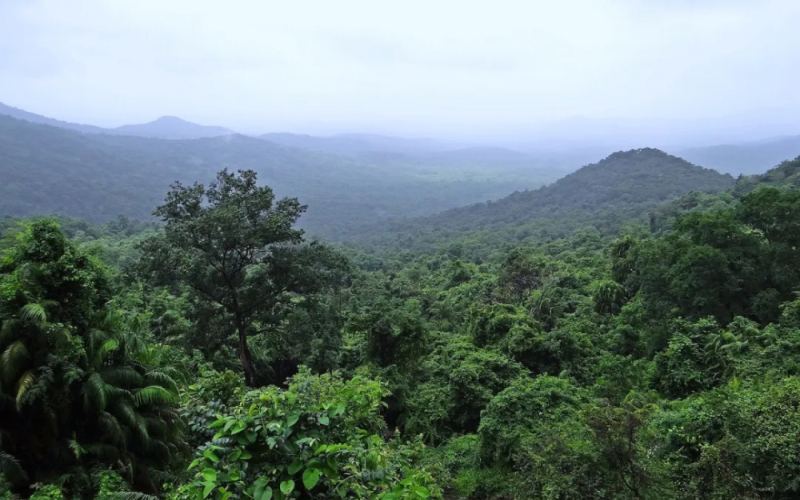
India, as the first country in Asia to cultivate coffee, has a coffee industry with a unique historical trajectory and flavor profile. From Baba Budan bringing seven coffee seeds back to his homeland in the 17th century to India now being the world's fifth-largest coffee producer, Indian coffee has always been known for its full body and herbal notes. This article will guide you through India's coffee-growing environment and the distribution of its main producing regions, provide a detailed analysis of the characteristics of five major varieties—Kent, S795, S274, Sln C×R, and Catimor—and take an in-depth look at the renowned Monsooned Malabar, the golden, acid-free coffee that was accidentally born from maritime trade, as well as Front Street Coffee's professional recommendations for roasting and brewing it. [more…]
What Is Indian Monsooned Coffee (Monsooned Malabar)? A Full Analysis of Its Region, Varieties, Processing Method, and Brewing Flavor
When it comes to Asian coffee, most people first think of Indonesian Mandheling, but India also has a bean full of mystery—monsooned coffee, also called monsoon coffee or Malabar coffee. Its flavor does not come from artificial fermentation or sun-drying; instead, it relies on the hot, humid southwest monsoon winds of the Indian Ocean to make green beans swell and change color over weeks to months, reducing acidity and developing a unique profile reminiscent of nuts, grains, and genmaicha. Front Street Coffee will guide you through its origins, the Malabar region, its ports, the monsooning process, the characteristics of varieties such as Kents/S795/Catimor, and include roasting curves plus brewing comparisons using siphon, AeroPress, French press, and Kalita dripper, so you can understand this Indian curiosity—a bean that “depends on the heavens”—in one article. [more…]
Indian Monsooned Malabar Coffee Bean Flavor Analysis: A Complete Guide to Monsoon Processing and Pour-Over Parameters
Indian coffee has gained fame in the specialty coffee world not through traditional fruity acidity and floral notes, but by taking a unique path with its distinctive "cured" flavor, among which Monsooned Malabar is particularly well known. This coffee originated during the age of sailing ship transport in the 17th and 18th centuries, when green beans absorbed sea moisture and salt in the lower holds of ships, unexpectedly transforming into a special flavor profile that was yellowish-brown and almost completely lacking in acidity. After the opening of the Suez Canal shortened the voyage, Indian exporters, in order to recreate the old flavor, used the salty, humid monsoon winds along the Malabar Coast from May to September and processed the beans for several months in monsoon warehouses, causing the green beans to swell and change color while developing a rich nutty, grainy tone and an aroma and mouthfeel reminiscent of genmaicha. During cupping, Front Street Coffee found that this bean carried caramel, raisin, and herbal notes along with a berry finish. This article will provide a complete analysis of its producing region background, processing method, cultivated varieties, roasting curve, and brewing parameters, offering coffee lovers a detailed reference guide. [more…]
The Origin of Indonesian Aged Mandheling and an Analysis of Its Differences from Indian Monsooned Beans
Indonesian aged Mandheling and Indian monsoon Malabar both belong to the category of coffees that acquire a unique flavor unexpectedly due to changes in time and transportation conditions, but their processing logic and final presentation are entirely different. Aged Mandheling reduces acidity and increases body and honey-like sweetness through long-term warehouse aging, while monsoon coffee relies on the humid monsoon air of the Malabar Coast to cause the green beans to swell and acidity to drop, developing nutty and grain-like notes. Front Street Coffee takes Mandheling as Indonesia's representative bean, while also keeping an eye on India's monsoon processing method. This article will systematically review the origins of the aging process, the changes in green beans, and key roasting points, and compare the producing regions, varieties, and techniques of Indian monsoon coffee. [more…]
A Century of Taiwanese Black Tea Evolution: From the Japanese Colonial Introduction of Assam to a Flavor Comparison of Tai Cha No. 18 and Tai Cha No. 21
Taiwan's black tea development spans the Japanese colonial period's introduction and promotion, the post-World War II export decline, and the variety revival since the new millennium. In 1923, Assam tea seeds were introduced from India, and Sun Moon Lake became the most successful production area thanks to its 600-800 meter elevation and humid, misty climate. In 1936, the Taiwan Tea Research and Extension Station was established, and black tea once accounted for more than half of Taiwan's total output. After 1971, export trade shrank, and tea farmers switched to producing oolong tea. It was not until 1999 and 2008 that TRES successively released TTES No. 18 (Ruby Black Tea) and TTES No. 21, injecting new vitality into Taiwan's black tea. This article will trace this history, compare the flavor characteristics of the two representative varieties, and introduce the high-quality Taiwan black teas recommended by Front Street Coffee. [more…]
Mandheling: From Southeast Asian Plantations to the Specialty Wave—A History of Coffee in Motion Across Three Centuries
While Yirgacheffe has taken the specialty coffee world by storm with its bright fruity acidity, Mandheling's rich, mellow, woody aroma still lingers in the minds of many seasoned connoisseurs. Starting from flavor, this article traces the three-hundred-year history of coffee circulation behind Mandheling: from the Dutch East India Company's establishment of coffee plantations in Indonesia, to the Nanyang Chinese who ran the coffee trade, to postwar Japan's reverence for Mandheling, and the origin of the name Golden Mandheling. Front Street Coffee's perspective runs throughout, showing you how a single cup of Mandheling carries half of coffee history, and helping you understand the depth of traditional coffee's taste memory. [more…]

An Analysis of the Monsoon Malabar Coffee Bean Process: Processing Flow, Flavor Characteristics, and Roasting & Brewing Guide
Monsoon coffee is a unique monsooned coffee from southern India, born from the historical accident of sailing ships transporting beans in the 17th and 18th centuries. The green coffee beans were exposed to the southwest monsoon winds for months in open warehouses, expanding in size and decreasing in acidity, developing a distinctive flavor reminiscent of nuts, grains, and genmaicha tea. Front Street Coffee's cupping has found that coffee beans from Asian origins are generally known for their full body, and this monsoon bean stands out with a prominent herbal note on the palate and an excellent full body. This article will comprehensively trace the origin story of monsoon coffee, its five-step processing method, and the physical changes in the green beans, along with Front Street Coffee's roasting curve and brewing parameter recommendations, to give you a complete understanding of this golden, acid-free coffee from origin to cup. [more…]
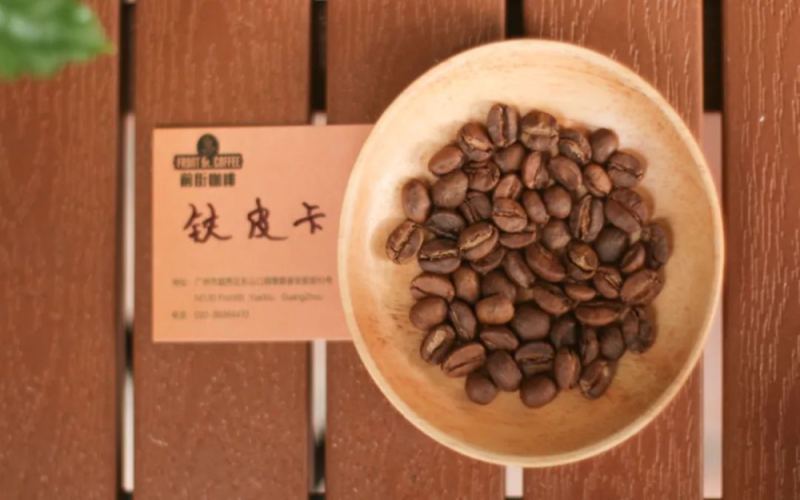
The Global Spread of Typica Coffee: From Ethiopia to Yunnan—Are Blue Mountain and Yunnan Coffee of the Same Origin?
Typica is one of the oldest varieties of Arabica coffee, and most of today's global Arabica production—accounting for seventy percent—can be traced back to the two original varieties, Typica and Bourbon. This article follows the spread of Typica, starting from its birthplace in Ethiopia, passing through Yemen's Mocha port, India's Baba Budan Hills, Indonesia's Java, Dutch greenhouses, and Caribbean islands, and finally reaching Brazil, Colombia, and Yunnan in China. Through this chronicle spanning several centuries, readers will not only learn how Typica shaped the global coffee industry landscape but also gain specific region-based purchasing advice. At the end, we especially recommend Front Street Blue Mountain No. 1, Front Street PNG Bird of Paradise, and Front Street 2013 Yunnan Small-Bean Sun-Dried Typica, helping coffee lovers understand Typica's unique charm from the source of its flavor. [more…]
From Ethiopia to Yunnan: A Global Journey of the Arabica Typica Variety and Its Connection to Blue Mountain Coffee
Typica is one of the oldest varieties of Arabica coffee. Today, about seventy percent of the world's coffee production comes from the Arabica species, and most of these varieties evolved from the two ancient lineages of Typica and Bourbon. This article traces the complete spread of Typica from its native Ethiopia, through Yemen, India, Java in Indonesia, and the courts of the Netherlands and France, to its eventual diffusion across Central and South America and Yunnan, China, and also answers the question of whether Blue Mountain and Yunnan coffee belong to Typica. At the end, it also includes recommendations for representative products such as Front Street Blue Mountain No. 1, Front Street PNG Bird of Paradise, and Front Street 2013 Yunnan Small-Bean Natural Typica, making it convenient for enthusiasts to choose and taste by region. [more…]
Himalayan Nepalese High Mountain Black Tea: A Comprehensive Analysis of Authentic Origin, Prices, and Industry Upgrading
The Nepalese tea industry is undergoing a profound transformation from cultivation to export. Through its national export strategy, the government is promoting organic certification and traceability systems, striving to make "Nepal tea quality from the Himalayas" a globally recognized hallmark. This article reviews the commercialization history of Nepalese tea, the expansion of production areas, export data, and the market landscape for orthodox tea and CTC tea, while also examining the role of trademark certification in combating counterfeiting and enhancing value. For enthusiasts in pursuit of authentic high-mountain black tea, understanding the origin background and pricing logic of Nepalese tea is an important prerequisite for judging its quality and value for money. Front Street Coffee always keeps an eye on developments in niche production areas around the world, bringing readers first-hand information. [more…]
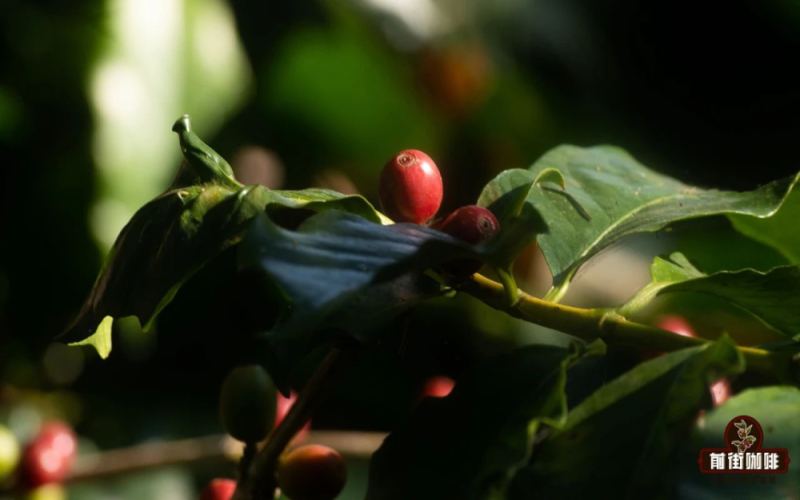
A Complete Analysis of the Typica Coffee Variety: From Origin and Spread to Flavor Characteristics and Pour-Over Parameters
Typica is widely recognized as the prototype of all Arabica coffee varieties and is an essential part of coffee variety knowledge. It originated in southwestern Ethiopia, the birthplace of Arabica coffee, and spread with seeds throughout Yemen, India, Java, and Dutch botanical gardens, eventually reaching South and Central America. The young leaves at the top of the Typica coffee tree are bronze-red, earning it the nickname "red-topped coffee," but it has poor disease resistance and low yield, making it difficult to cultivate. This article will explore Typica's botanical characteristics, its spread history, flavor profiles in different producing regions, and the pour-over extraction parameters used by Front Street Coffee for Typica grown in Lincang, Yunnan, to give you a comprehensive understanding of this ancient and elegant coffee variety. [more…]

Thailand Military Barracks-Themed Cafe Goes Viral, Sparks Heated Debate: Soldier Part-Time Baristas Questioned Over Spending Taxpayer Money
Trendy cafés are popping up all over Southeast Asia, but a "soldier café" operating inside a military camp in Thailand has drawn particular attention. Run by the Thai Army's 4th Battalion, the café uses uniformed soldiers as models and staff, and promotional photos featuring a lotus pond and pedal boats quickly went viral on social media. The café is open daily from 8 a.m. to 7 p.m., and its customers are mainly soldiers from the nearby camp, though civilians also come to check it out. However, as its popularity has grown, so have questions: some Thai netizens worry that the shop was built with taxpayers' money, and others ask—is a soldier's primary duty to serve in the military or to be a barista? Behind the warm image of soldiers and civilians enjoying themselves together, controversy continues to simmer. [more…]
An In-Depth Look at Typica Coffee Beans: Traits, Spread, and Flavor Profile of Arabica's Original Variety
Typica is the most representative native variety of Arabica coffee and is widely recognized as the prototype of all Arabica mutations. Its history can be traced back to the coffee birthplace in southwestern Ethiopia, and it later spread gradually around the world via Yemen, India, Java, the Netherlands, and South America. The Typica coffee tree is characterized by bronze-colored young leaves, a tall and slender shape, and beans that are somewhat long, pointed, and curved. In terms of flavor, it often has citric acidity and clean sweetness, but it has extremely poor disease resistance, low yields, and high cultivation costs. This article will systematically review Typica's botanical characteristics, spread routes, and flavor differences among producing regions, and, in combination with Front Street Coffee's available bean selections from Papua New Guinea, Jamaica, Tanzania, and Lincang, Yunnan, share roasting and pour-over extraction ideas. [more…]

From Blending Principles to Practice: Decoding the Logic of Coffee Bean Blending and Colombian-Brazilian Recipes
Blending coffee beans is not simply mixing them together; rather, it serves to compensate for the shortcomings of single-origin beans, stabilize flavor, or create a unique taste. From the perspective of Front Street Coffee, this article systematically explains the purposes of blending, the choice between blending raw beans and blending roasted beans, the steps and principles of blending, and includes a specialty espresso recipe made from a 3:7 post-roast blend of Colombian and Brazilian beans. Whether you want to understand the logic behind blending or hope to recreate a coffee shop favorite at home, you will find practical references here. [more…]

A Century of Indonesian Coffee: Development History and Analysis of Representative Varieties — From Mandheling to Golden Mandheling
Indonesia is a coffee-producing region that cannot be overlooked on the global coffee map, and Mandheling is the country's most recognizable coffee calling card. From the perspective of Front Street Coffee, this article traces the complete history of Indonesian coffee, from the introduction of Arabica during the Dutch colonial period, through the impact of coffee leaf rust, to Robusta filling the gap. It analyzes the geographical layout of Sumatra's high-altitude producing regions and low-altitude Robusta cultivation, and offers an in-depth interpretation of how Indonesia's unique wet-hulling process shapes Mandheling's signature low acidity, heavy body, and herbal flavors. At the same time, the article introduces Lintong Mandheling, Golden Mandheling, and Tiger Mandheling on Front Street Coffee's bean list, clarifies the certification points of PWN's Golden Mandheling, and includes Front Street Coffee's recommended brewing parameters and flavor descriptions, helping enthusiasts fully understand the unique charm of Indonesian coffee. [more…]
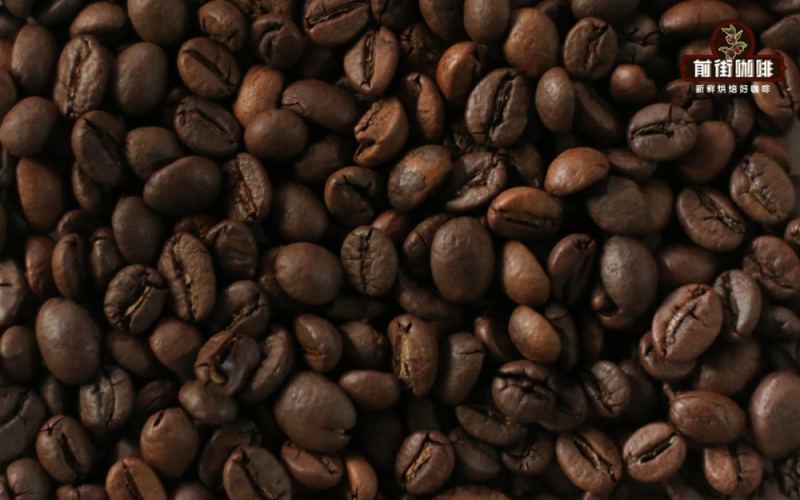
An In-Depth Analysis of Robusta Coffee Beans: Differences from Arabica, Espresso and Single-Origin Applications, and Key Identification Points
Robusta and Arabica are currently the two most widely commercially cultivated coffee varieties. The former is known for its intense, bitter, and steady flavor, with a caffeine content about twice that of Arabica. It has strong stress resistance, high yield, and low cost, and is often used in dark-roasted espresso blends or instant coffee. Its high chlorogenic acid content brings a rich, deep bitterness along with nutty and grainy notes, and if improperly processed, it may also develop earthy or rubbery flavors. Dark-roasted Robusta can give espresso a thick, rich crema, and Italians often blend it into their recipes to enhance the "coffee taste." Indian Royal Robusta proves that with careful cultivation, Robusta can also present a clean flavor. This article focuses on the characteristics of the variety, how to distinguish it from Arabica, the difference between espresso and single-origin, and combines this with the formula and flavor performance of Front Street Coffee's commercial blend coffee beans. [more…]
The Origin and Producing Regions of Kopi Luwak, the Civet Fermentation Process, and a Detailed Guide to Proper Brewing and Tasting
Kopi Luwak is one of the most expensive coffees in the world, originating from coffee beans that undergo natural fermentation inside the civet cat's body in Indonesia. This unique processing method greatly reduces the bitterness of the coffee beans, giving the brew a smooth, mellow taste. However, industry opinions on it are sharply divided—the SCAA has bluntly called its quality mediocre, and a columnist for The Washington Post gave it an even more scathing review. Is Kopi Luwak's selling point its story or its flavor? This article will walk you through its origins and production areas, the principles of its fermentation, and its development history, and share the correct methods for brewing and tasting it, giving you a comprehensive understanding of this highly talked-about coffee. [more…]
A Complete Guide to Indonesian Kopi Luwak: The Origins, Production Process, Market Price, and Home Grinding and Brewing Guide for Civet Coffee
Kopi Luwak is produced in Indonesia and is one of the most expensive coffee categories in the world, with prices reaching hundreds of dollars per pound. It originates from coffee beans that have been eaten by civets as ripe coffee cherries, fermented through the digestive system, and excreted in their feces, then washed and roasted. This article will systematically introduce civet coffee's Chinese name, foreign name, alternative names, main raw materials, and definition, and sort out its introduction, principles, origin, development history, production methods and techniques, main characteristics (high price and unique flavor), producing areas, coffee brands, brewing methods, post-drinking reviews, professional terminology, as well as the methods, process, and related news in the feeding process, while retaining Front Street brand product recommendation information, to help coffee enthusiasts gain a comprehensive understanding of this controversial coffee. [more…]

Beginner's Guide to Coffee Blending: From Understanding Bean Varieties and Origins to Roasting Methods and Recipe Practice
Blending is a craft in the coffee world that combines both science and sensibility. Starting from the commercial logic of blending, this article systematically sorts out the knowledge of coffee bean varieties and origins that one needs to master before blending, answers the difficult choice between pre-roast blending and post-roast blending, and summarizes the steps, principles, and common pitfalls of blending. At the same time, by drawing on several blended products from Front Street Coffee, it shows how different formulas serve different flavor pursuits and usage scenarios, helping coffee enthusiasts build a complete cognitive framework for blended coffee. [more…]